

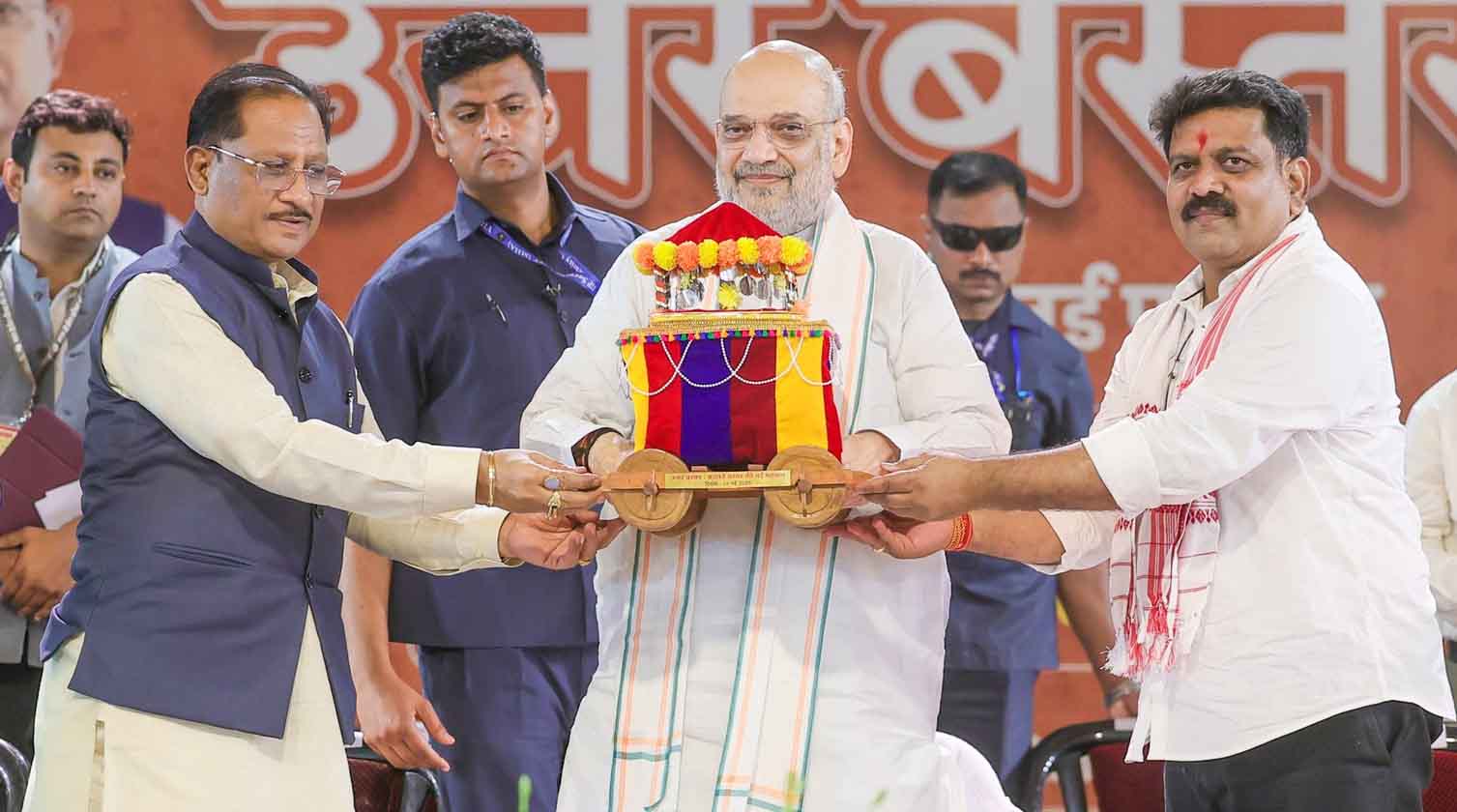
JAGDALPUR: Union Home Minister Amit Shah declared on Monday that India is officially “Naxal-free,” asserting that the Narendra Modi government has achieved in just a few years what seemed impossible for decades. Addressing families of martyrs, Central Armed Police Forces (CAPF) personnel, and victims of Naxal violence in Jagdalpur, Chhattisgarh, he stated that the country has finally overcome one of its most persistent internal security challenges.
Shah highlighted three pivotal dates in this eradication campaign: January 21, 2024 (the first major security meeting after the new Chhattisgarh government formed), August 24, 2024 (the official resolution to eliminate Naxalism), and the target deadline of March 31, 2026, which he proudly noted was fulfilled early. He credited this historic success to the resilience of tribal communities and the sacrifices of the CRPF, BSF, ITBP, SSB, state police forces, and specialized units like the District Reserve Guard (DRG) and CoBRA commandos.
Focus Shifts to Development With the security threat neutralized, the focus is now squarely on regional growth. The Home Minister launched the “Shaheed Veer Gunda Dhur Seva Dera” project, announcing that 70 out of nearly 200 CAPF camps in Chhattisgarh will be transformed into dedicated service centers for tribal communities. These hubs will provide seamless access to over 370 government schemes, including Aadhaar and ration card services, healthcare, banking, and agricultural guidance.
Dismissing the narrative that Maoism grew due to a lack of development, Shah countered that armed Naxals actively obstructed progress. He assured the public that over the next five years, Bastar is set to emerge as the most developed tribal region in the country.

Rehabilitation and Cultural Revival The government is also focusing on peaceful reintegration. A detailed rehabilitation plan has been prepared, backed by an initial ₹20 crore allocation, to provide skill training and education to approximately 3,000 surrendered cadres, allowing them to rejoin mainstream society with dignity.
Furthermore, Shah emphasized the revival of Bastar’s rich cultural heritage, which had suffered heavily under decades of violence. Through new initiatives like the Bastar Olympics and Bastar Pandum, the government aims to promote the region’s unique art, music, dance, and tribal identity, marking what Shah described as “a new dawn” for Bastar.