

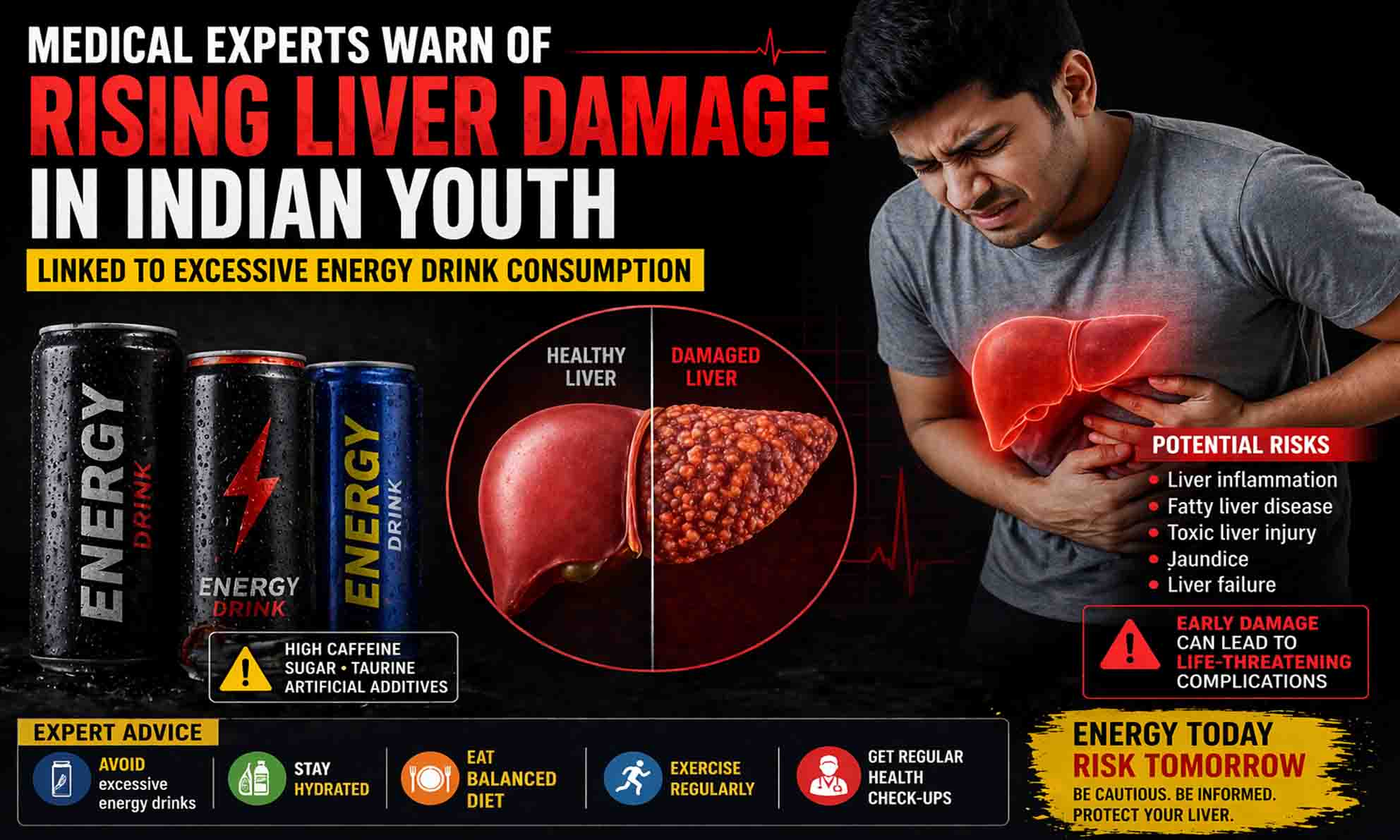
NEW DELHI: On the occasion of World Liver Day, medical experts have raised serious concerns over a growing trend of liver damage among young people in India, directly linking it to the excessive consumption of energy drinks. Doctors report a noticeable rise in cases where young individuals, primarily in their 20s and 30s, are showing early signs of severe liver disease.
Often marketed as performance enhancers and fatigue relievers, energy drinks contain high levels of caffeine alongside substances like taurine and other stimulants. Experts warn that these components place an immense metabolic burden on the liver.
“Three major contributors to liver dysfunction are energy drinks, alcohol, and high-sugar beverages. Alcohol continues to be a leading cause of liver disease, and sugary drinks contribute to fatty liver disease,” stated Dr. Abhideep Chaudhary, President of the Liver Transplantation Society of India.
The medical community is particularly alarmed by the popular trend of mixing energy drinks with alcohol. The stimulant effect of the caffeine can mask the sedative impact of alcohol, often leading young people to consume far more than they intended, multiplying the toxic load on the liver.

Medical literature supports these clinical observations. A recent case published in the BMJ Case Reports documented acute hepatitis in a healthy individual linked to high energy drink consumption, attributed specifically to elevated levels of niacin, which can be hepatotoxic (toxic to the liver). Furthermore, the high sugar content, caffeine, and chemical additives in these beverages lead to fat accumulation in liver cells, oxidative stress, and inflammation, significantly increasing the risk of Non-Alcoholic Fatty Liver Disease (NAFLD).
Currently, studies suggest that nearly 25 to 30 percent of the urban population may be affected by NAFLD, with a sharp spike in cases among adolescents and young adults.
“We are witnessing a demographic shift in liver disease, with more patients aged 20 to 30 reporting conditions that were once seen primarily in older individuals. Many young people are unaware of the risks and consider these beverages part of a normal lifestyle,” warned Dr. Neerav Goyal, President-Elect of the Liver Transplantation Society of India.
Doctors have issued a stern warning that advanced liver damage is irreversible and may require a liver transplant as the only life-saving option. Experts are urgently advising moderation in consumption and calling for greater public awareness regarding the severe long-term health risks associated with energy drinks.