

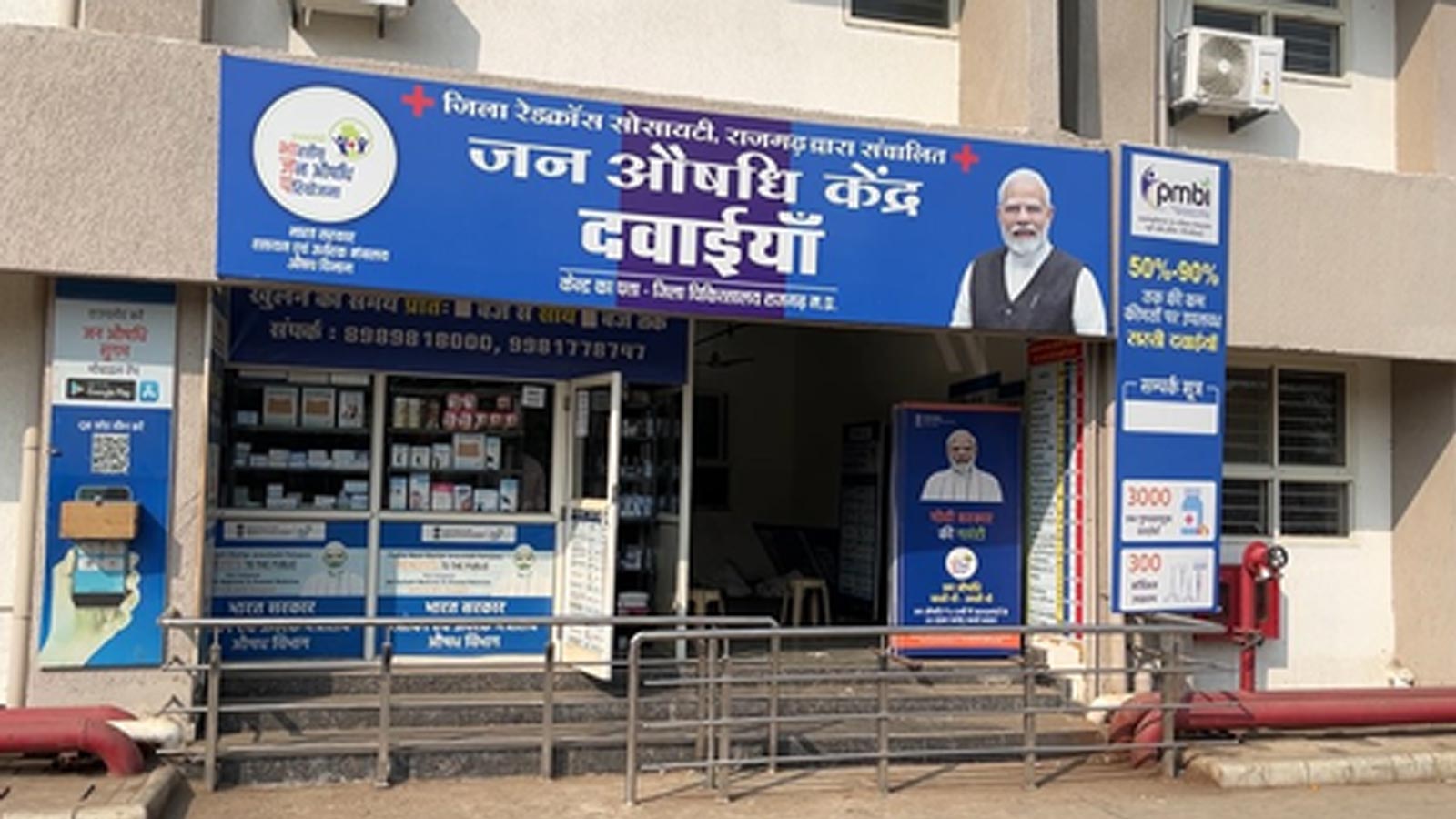
NEW DELHI: The Union Government is aggressively expanding its flagship healthcare initiative, setting a firm target to operationalise 25,000 Pradhan Mantri Bhartiya Janaushadhi Kendras (JAKs) across the country by March 2027.
As of June 30, 2026, a total of 20,149 Kendras are already functioning, Union Minister for Chemicals and Fertilizers J.P. Nadda informed the Lok Sabha in a written reply on Friday.
Uncompromised Quality at Affordable Prices
The Pradhan Mantri Bhartiya Janaushadhi Pariyojana (PMBJP) currently offers a massive product basket of 2,110 medicines and 315 surgical items, medical consumables, and devices. These cover critical therapeutic categories such as cardiovascular, anti-cancer, anti-diabetic, anti-infective, and gastrointestinal medicines, alongside nutraceuticals.
Crucially, these medicines are sold at prices around 50-80 per cent lower than their branded alternatives in the open market.
Addressing concerns about the efficacy of generic medicines, the Minister emphasized the government’s rigorous, multi-layered quality assurance system:
-
Certified Procurement: Medicines are sourced strictly from WHO Good Manufacturing Practices (GMP)-certified manufacturers.
-
Mandatory Batch Testing: Every batch undergoes comprehensive quality testing before being dispatched for supply.
-
Accredited Labs: Samples are rigorously tested at NABL-accredited laboratories that are fully compliant with Good Laboratory Practices (GLP).


Strengthening Supply Chains and Outreach
To address local supply gaps, the government introduced new financial incentives in September 2024, encouraging Kendra owners to heavily stock 200 commonly used medicines. The implementing agency, PMBI, has also fortified its IT-enabled supply chain, which now features five central warehouses and 42 distributors across the country to closely monitor the availability of 400 fast-moving products.
“An independent evaluation carried out during 2023-24 found that the expansion of the Jan Aushadhi network had significantly improved the availability and accessibility of affordable generic medicines, particularly in rural, remote and underserved areas.”
Citizens facing issues with medicine availability can officially register complaints via the Centralised Public Grievance Redress and Monitoring System (CPGRAMS), by email, or through the dedicated PMBJP helpline. To further improve public acceptance of generics, the government conducts massive multimedia campaigns, WhatsApp-based outreach, and hosts health camps and rural workshops during the annual Jan Aushadhi Week.
Financial Utilization and Top Performing States
The scheme continues to see robust financial utilization. For the 2024-25 fiscal year, expenditure stood at ₹182.73 crore against a revised estimate (RE) of ₹284.50 crore. The entire revised allocation of ₹190 crore was fully utilized in 2025-26. For the current fiscal year (2026-27), ₹50 crore has already been spent up to June 30 against an RE of ₹200.50 crore.
State-wise data reveals that Uttar Pradesh leads the nation in network density, followed closely by southern states.
| State | Operational Kendras (as of June 2026) |
| Uttar Pradesh | 4,226 |
| Kerala | 1,833 |
| Karnataka | 1,720 |
| Tamil Nadu | 1,631 |
| Bihar | 1,304 |
| West Bengal | 1,014 |
(Note: Tamil Nadu’s total includes 74 Kendras located specifically in the Kallakurichi Lok Sabha constituency, comprising 62 in Salem and 12 in Kallakurichi district.)