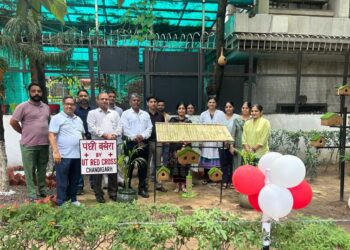


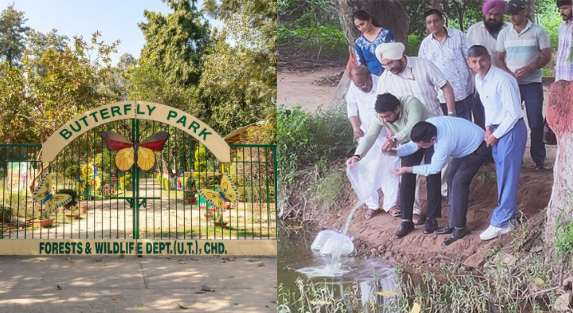
CHANDIGARH: In a significant interdepartmental effort to combat vector-borne diseases, the Department of Animal Husbandry & Fisheries, U.T. Chandigarh, in collaboration with the Forest Department and the Malaria Wing of the Health Department, has released Gambusia fingerlings into the water bodies at Butterfly Park, Sector 26.
The event marked the official launch of a city-wide drive to release these highly effective mosquito-larvivorous fish into various ponds and stagnant water bodies across the Union Territory.
An Eco-Friendly Defense Strategy
Under this comprehensive drive, Gambusia fish are slated to be released at 132 identified sites across Chandigarh, with the exercise scheduled for completion by September 11. This joint initiative is a major step toward strengthening biological control measures against mosquito-borne diseases such as malaria and dengue, minimizing the reliance on toxic chemical sprays.
Gambusia fish act as a highly efficient and eco-friendly biological control agent. A single Gambusia can consume approximately 100 to 300 mosquito larvae per day, effectively destroying the mosquito breeding cycle directly at its source.
Collaborative Departmental Action
The launch event was organized under the guidance of Sh. Pardeep Kumar, IAS, Secretary, Animal Husbandry & Fisheries, U.T. Chandigarh. It was attended by key officials, including Sh. Naveen Rattu (Director, Animal Husbandry & Fisheries), Dr. Upendrajeet Singh Gill (Assistant Director, Malaria), Dr. P.K. Singh (Research Officer, Animal Husbandry), and Ms. Ritika (In-charge, Butterfly Park).
Speaking on the occasion, Sh. Naveen Rattu highlighted the ecological benefits of the initiative:

“Releasing Gambusia fingerlings into stagnant water bodies is an eco-friendly biological method of controlling mosquito breeding. This initiative strongly reflects the coordinated approach of the Chandigarh Administration towards maintaining a healthy and mosquito-free environment.”
Dr. Ashwani Kumar, Joint Director, Animal Husbandry & Fisheries, further stated that the department is taking proactive, coordinated measures to directly target potential breeding sites. Such interdepartmental efforts, he noted, will significantly fortify Chandigarh’s overall, long-term strategy for preventing vector-borne diseases.
Sourcing and Public Availability
The Gambusia fingerlings being utilized for this drive are selectively bred at the Government Fish Seed Farm in Chandigarh, which functions under the Department of Animal Husbandry & Fisheries. The department regularly undertakes the breeding and stocking of these fish to maintain a steady, reliable supply for biological control efforts.
As part of its broader community outreach, the administration is also offering these fish to local residents. Citizens requiring Gambusia fingerlings for their private water bodies or ponds can directly contact Sh. Sultan Singh, V.I., In-charge of the Government Fish Farm, at 9417495595.