

New Delhi, August 27: The Union Cabinet, chaired by Prime Minister Narendra Modi, on Wednesday approved four major railway projects worth around ₹12,328 crore, aimed at enhancing connectivity, boosting freight movement, and spurring regional development.
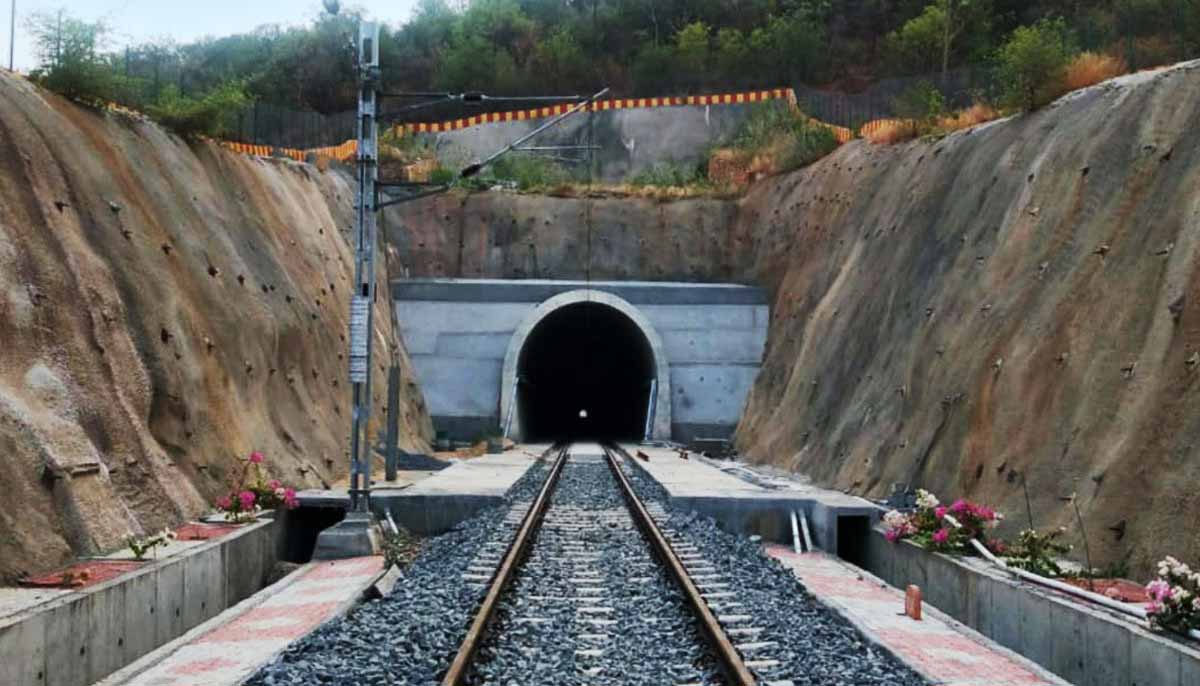
A new rail line project in Gujarat’s Kutch region and multi-tracking works in Karnataka, Telangana, Bihar, and Assam form the core of the approvals.
In Gujarat, the Deshalpar–Hajipir–Luna and Vayor–Lakhpat rail line, costing ₹2,526 crore, will cover 145 route km and 164 track km. Expected to be completed in three years, the line will facilitate the transport of salt, cement, coal, clinker, and bentonite while boosting tourism to sites such as the Rann of Kutch, Dholavira, Koteshwar temple, Narayan Sarovar, and Lakhpat fort. A total of 13 new stations will be built, benefiting 866 villages and nearly 16 lakh people.

The Cabinet also approved:
- Secunderabad (Sanathnagar)–Wadi third and fourth line (Karnataka & Telangana), 173 km, ₹5,012 crore, completion in five years.
- Bhagalpur–Jamalpur third line (Bihar), 53 km, ₹1,156 crore, completion in three years.
- Furkating–New Tinsukia doubling project (Assam), 194 km, ₹3,634 crore, completion in four years.
Together, these projects will add 565 route km to the Indian Railways network, benefiting over 3,108 villages and 47 lakh people, while generating 251 lakh human-days of employment during construction.
The capacity expansion is expected to ease congestion, improve operational efficiency, and handle 68 million tonnes of additional freight annually—including coal, cement, steel, fertilizers, petroleum products, and agricultural goods.
Officials said the projects will reduce logistics costs, oil imports, and carbon emissions. The estimated reduction of 360 crore kg of CO₂ emissions is equivalent to planting 14 crore trees.
Planned under the PM Gati Shakti National Master Plan, the projects align with the government’s vision of Atmanirbhar Bharat, fostering integrated multimodal connectivity and creating new avenues for employment and economic growth.