

NEVADA (USA): Hindus are officially calling for the creation of permanent and dedicated “Hindu Prayer Rooms” at Scotland’s publicly funded University of Glasgow and University of St Andrews, highlighting a significant gap in spiritual provision for Hindu students.
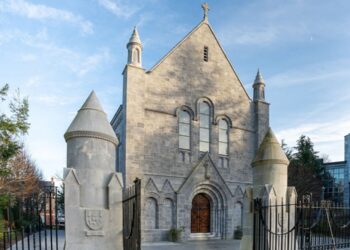
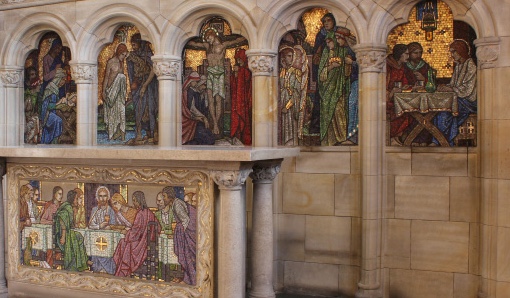
Both prestigious universities currently house Christian chapels and designated Muslim prayer spaces, prompting calls for equitable treatment for other major world faiths.
In a statement issued from Nevada on Monday, distinguished Hindu statesman Rajan Zed emphasized that state-funded institutions, backed by taxpayer dollars, must respond to the requirements of their vibrant Hindu student bodies by providing designated halls for rituals, quiet reflection, festivals, and spiritual exercise.
A Call for Equal Treatment
Zed, who serves as the President of the Universal Society of Hinduism, questioned whether Scottish public universities are subject to equality law and asked if Hinduism has to prove itself “worthy” of accommodation.
“Universities which pride themselves on diversity should not pick and choose which faiths deserve a home and which do not,” Zed stated. “Hindus are requesting nothing more than the same basic respect and dignity afforded to some other faiths. It is not a request for special treatment; it is simply a request for equal treatment.”
Zed noted that while the universities offer shared generic multi-faith facilities, these spaces often do not adequately accommodate specific Hindu worship practices and cannot effectively replace a dedicated space.
Currently, the religious infrastructure at both institutions is heavily weighted toward Christian worship:
-
University of St Andrews: Houses both St Salvator’s Chapel and St Leonard’s Chapel, which host baptisms. The university website notes that the use of these chapels is generally restricted to denominations in agreement with the World Council of Churches.

-
University of Glasgow: Houses the Memorial Chapel, which holds regular Christian services.

Replicating Inclusive Infrastructure
Rajan Zed pointed out that establishing a “Hindu Prayer Room” would be a highly positive step, especially given the sizable and growing presence of Hindu students in these academic communities. He highlighted that many universities across the United States and some in England already offer dedicated Hindu prayer rooms.
To adequately meet these religious requirements, Zed suggested that the designated rooms should ideally feature:
-
A shrine containing murtis (statues) of popular Hindu deities, including Shiva, Vishnu, Rama, Krishna, Durga, Venkateshwara, Ganesha, Murugan, Saraswati, Hanuman, Lakshmi, and Kali.
-
Traditional spiritual items, such as a ghanta (a large metallic bell hanging from the ceiling), a dholak (a two-headed hand-drum), and a Shiva-linga.
Appeal to Scottish Leadership
In his statement, Zed directly urged Scotland Tertiary Education Minister Ben Macpherson, Cabinet Secretary for Education Màiri McAllan, University of Glasgow Principal Andy Schofield, and University of St Andrews Principal Dame Sally Mapstone to seriously evaluate the issue.
He further called on Scottish public universities to formalize faith space policies with clear guidelines guaranteeing equitable facility allocation across all major world faiths present on campus. Zed concluded by urging both universities to publicly commit to a clear timeline for the delivery of meaningful and equitable access, thereby setting a model for inclusive multi-faith infrastructure across Scotland.