

NEVADA (USA): Hindus are officially urging for the creation of permanent and dedicated “Hindu Prayer Rooms” across all publicly funded universities and colleges in Ireland, many of which currently house exclusive Roman Catholic or ecumenical-Christian chapels.
In a statement issued from Nevada on Friday, distinguished Hindu statesman Rajan Zed emphasized that Ireland’s state-funded educational institutions must respond to the requirements of their growing Hindu student bodies. Zed called for designated prayer and meditation halls designed specifically for rituals, quiet reflection, festivals, and spiritual exercise, which he stated would greatly aid in the students’ personal growth.
A Constitutional Obligation
Zed, who serves as the President of the Universal Society of Hinduism, argued that publicly funded universities and colleges in Ireland must uphold constitutional religious neutrality and should not establish or officially favor one religion over another.
He pointed to Article 44.2.2° of the Irish Constitution, which explicitly states that “The State guarantees not to endow any religion.” Zed asserted that this makes religious neutrality a strict constitutional obligation, not merely an optional policy.
Currently, several major Irish institutions prominently feature Christian places of worship:

-
Trinity College Dublin houses an ecumenical-Christian chapel.
-
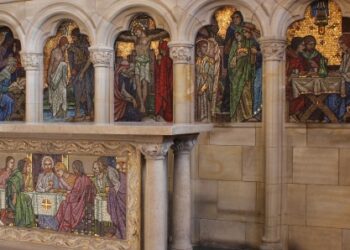
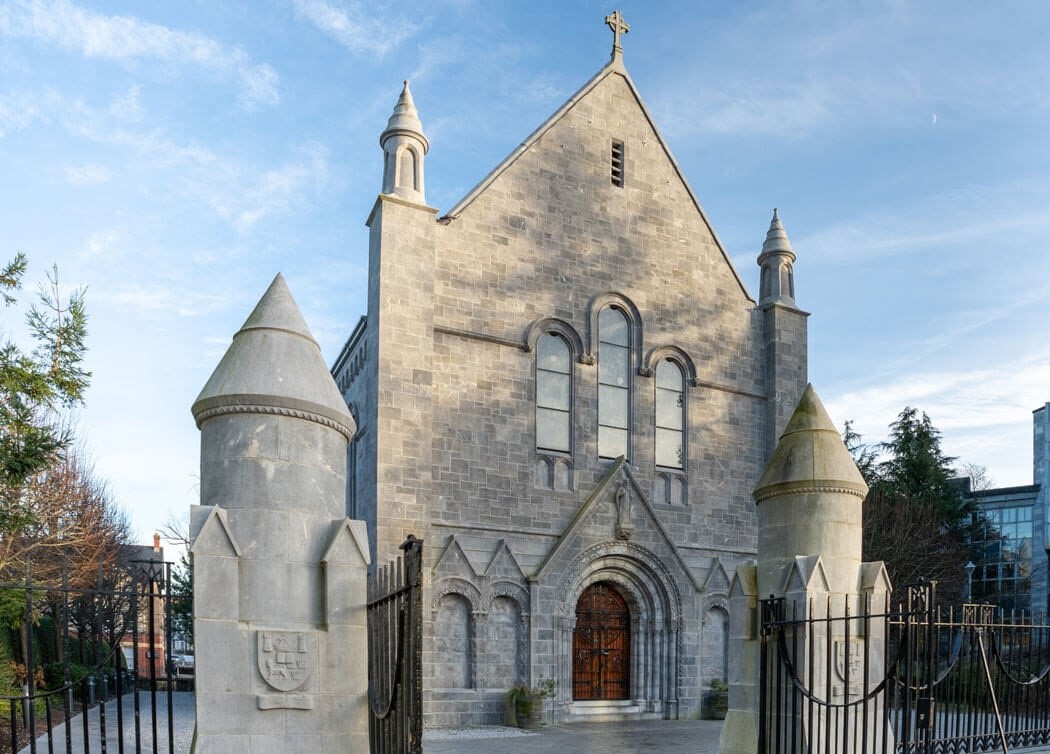
Roman Catholic chapels are present at University College Dublin, University of Galway, University College Cork, Dublin City University (St. Patrick’s and All Hallows Campuses), Mary Immaculate College (Limerick and Thurles), and St. Patrick’s Pontifical University Maynooth.
Replicating International Inclusivity
Rajan Zed noted that establishing a “Hindu Prayer Room” on Irish campuses would be a highly positive step toward meeting the spiritual needs of the reported presence of Hindu students in the country. He highlighted that many universities and colleges across the United States have already successfully integrated Hindu prayer rooms into their facilities.
To adequately meet the religious requirements, Zed suggested that the designated rooms should ideally feature:
-
A shrine containing murtis (statues) of popular Hindu deities, including Shiva, Vishnu, Rama, Krishna, Durga, Venkateshwara, Ganesha, Murugan, Saraswati, Hanuman, Lakshmi, and Kali.
-
Traditional spiritual items, such as a ghanta (a large metallic bell hanging from the ceiling), a dholak (a two-headed hand-drum), and a Shiva-linga.
Appeal to Educational Leaders
In his statement, Zed directly urged Ireland’s Higher Education Minister James Lawless, Higher Education Secretary General Colm O’Reardon, and the presidents of public universities and colleges to seriously evaluate the issue and become more receptive to the diverse needs of their student bodies.
He stressed that Irish educational institutions need to clearly recognize the crucial intersection of spirituality and education, a concept that holds deep importance in Hinduism.
Hinduism is the oldest and third-largest religion in the world, boasting approximately 1.3 billion adherents and a rich philosophical heritage, with moksh (liberation) serving as its ultimate spiritual goal.