


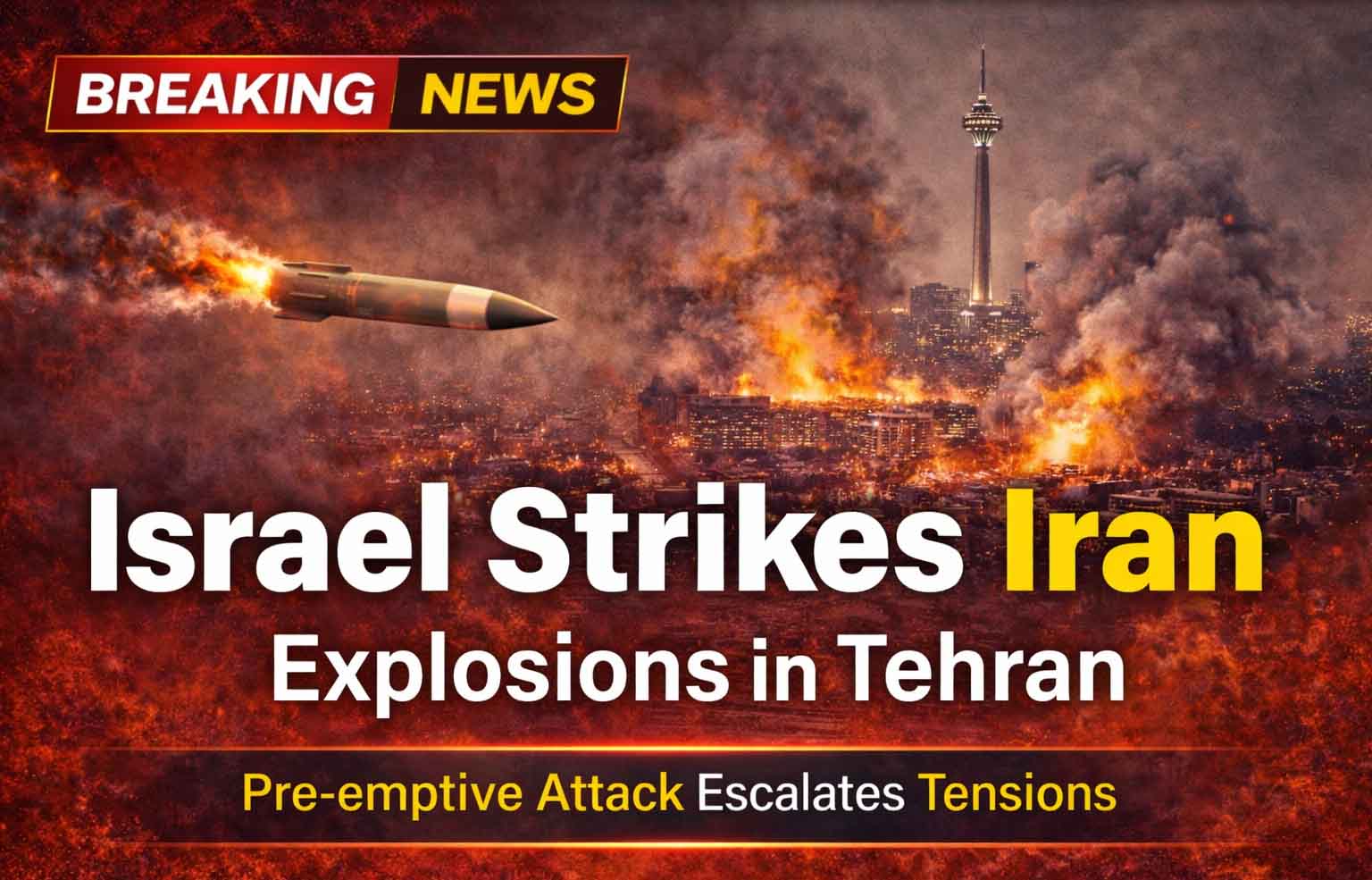
TEHRAN / JERUSALEM — The Iranian capital was rocked by a series of powerful explosions on Saturday after Israel launched what it described as “preventive” missile strikes against Iran. The military action marks a sharp and dangerous escalation of hostilities in the region, shifting a long-running shadow conflict into open warfare.
Local media reports indicate that several missiles struck prominent areas of the capital, including University Street and the Jomhouri district. Furthermore, thick plumes of smoke were seen rising near Pasteur Street in central Tehran—a highly secure zone that houses key Iranian government buildings. As of now, the full extent of the structural damage and any potential casualties remain unconfirmed by authorities.
Lockdown in Israel Anticipating severe retaliation, the Israeli military activated air raid sirens across multiple regions of the country. Authorities described the move as a proactive, precautionary step to prepare the Israeli public for the possibility of incoming missile fire from Iran or its allied proxies.
In a sweeping move to ensure civilian safety, Israel ordered all schools nationwide to remain closed. Citizens have been strongly advised to work from home, and a temporary ban has been imposed on all public gatherings.

Diplomacy Under Fire These dramatic military developments arrive at an incredibly sensitive diplomatic juncture. The strikes occurred against the backdrop of strained relations between the United States and Iran over a potential nuclear agreement.
Earlier in the day, US President Donald Trump characterized Iran as “very difficult” and “very dangerous.” The military escalation violently disrupts the diplomatic timeline; a third round of negotiations between Iranian and US officials had just taken place in Geneva on Thursday, with another critical round scheduled for later on Saturday.
Analysts note that throughout 2024 and 2025, the historic shadow war between Israel and Iran has steadily deteriorated into direct military confrontations. However, Saturday’s reciprocal missile attacks and aerial strikes represent a definitive and perilous shift from indirect hostilities to overt, direct exchanges.