


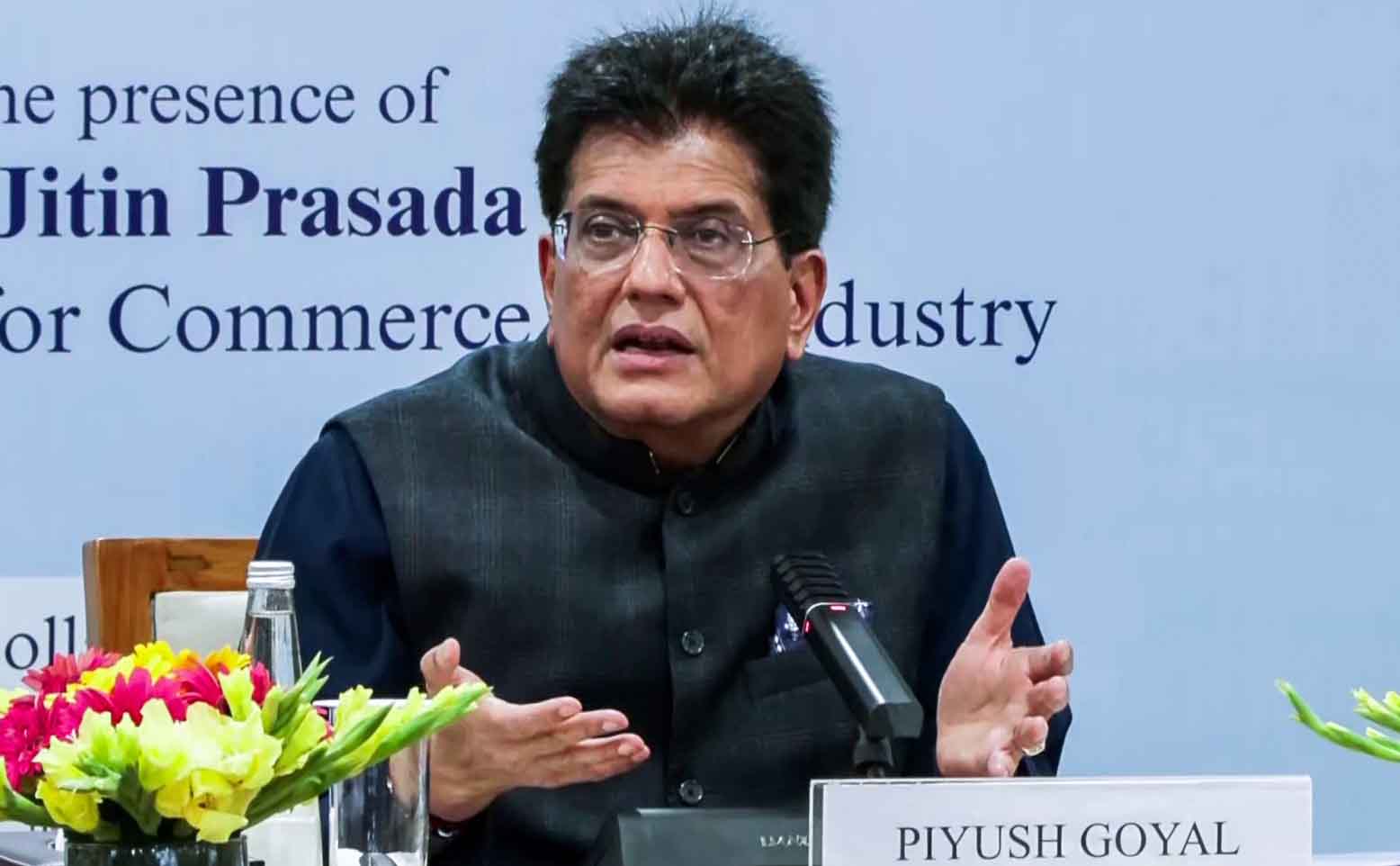
NEW DELHI — In a decisive move to deepen bilateral economic engagement, Commerce and Industry Minister Piyush Goyal held pivotal talks on Wednesday with a high-level Israeli delegation, officially advancing negotiations for the much-anticipated India-Israel Free Trade Agreement (FTA).
Translating Vision into Action The high-stakes meetings in New Delhi reflect a concerted effort to capitalize on the strategic relationship between Prime Minister Narendra Modi and Israeli Prime Minister Benjamin Netanyahu. Taking to the social media platform X, Minister Goyal emphasized the shared commitment of both nations.
“I had a productive interaction with the Israeli team… It is encouraging to see both sides working closely to unlock new opportunities in trade, innovation and growth, further strengthening our valued partnership,” Goyal stated.
The Israeli delegation is being led by the Foreign Trade Administration at the Ministry of Economy and Industry. Israel’s Minister of Economy and Industry, Nir Barkat, mirrored Goyal’s optimism online, noting that the “friendship I have forged with Piyush” and the leaders’ strategic ties are paving the way for a major economic breakthrough that will serve as a “powerful growth engine” for both countries.

Economic Blueprint and Bilateral Impact The groundwork for these formal talks was laid in November 2025, when the Terms of Reference (ToR) for the FTA negotiations were officially signed. This established a structured framework aimed at enhancing trade certainty and predictability—a move expected to be particularly beneficial for Micro, Small, and Medium Enterprises (MSMEs).
Total merchandise trade between India and Israel already stands at a robust $3.62 billion for the FY 2024-2025 period. Officials believe the FTA will act as a major catalyst to surge these figures upward by leveraging sectoral complementarities.
Scope of the Ongoing Negotiations Technical experts from both nations are currently engaged in comprehensive sessions covering critical aspects of the proposed trade pact, including:
-
Trade in Goods and Services
-
Rules of Origin
-
Sanitary and Phytosanitary Measures
-
Technical Barriers to Trade
-
Customs Procedures and Trade Facilitation
-
Intellectual Property Rights (IPR)