

CHANDIGARH: As schools across Punjab reopen their doors after a month-long summer break, the battleground against substance abuse is actively shifting. Moving beyond police stations and rehabilitation centers, classrooms are now emerging as the new frontline in the state’s flagship Yudh Nashean Virudh (War Against Drugs) campaign.
Under the leadership of Chief Minister Bhagwant Singh Mann, the state government is building a comprehensive safety net around every student. The strategy relies on a sensitized cadre of teachers, aware principals, and safe school environments to provide students with the knowledge to identify the dangers of drug use, the skills to combat mental stress, and secure options for anonymous reporting.
Empowering the Educators
To strengthen this new frontline, the Punjab government is heavily investing in the people who interact with adolescents every single day.
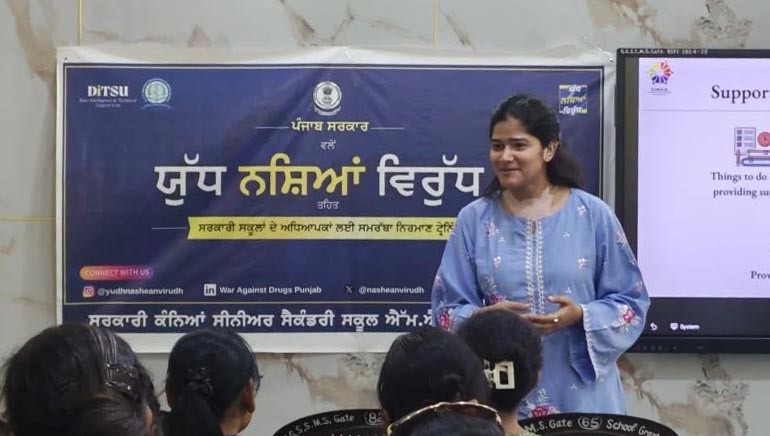
With expert support from the Tata Institute of Social Sciences (TISS), over 1,400 Heads of Schools across nine districts—particularly highly vulnerable border districts—have been extensively trained. These leaders are now equipped to identify early warning signs of substance use, respond with empathy, and address mental health challenges through a broader public health lens.
Furthermore, capacity-building workshops have successfully trained over 3,000 teachers of Classes IX–XII in Amritsar. The results have been highly encouraging: 75% of participating teachers reported feeling inspired to create healthier school environments, while 85% recognized the deep link between adolescent substance use, academic stress, peer influence, and emotional challenges. Given its success, the program is now being rapidly expanded across all districts.
Mindfulness and Evidence-Based Curriculum
Acknowledging that stress and emotional distress are root causes of adolescent vulnerability, Punjab has launched a statewide Mindfulness Programme for students of Classes VI to XII. The initiative introduces a daily 30-minute guided morning session comprising breathing exercises, meditation, and positive affirmations designed to boost emotional resilience. Piloted in 210 schools in Mohali, 83% of students reported an improved ability to handle difficult situations without extreme stress.
This emotional support is backed by India’s first statewide, evidence-based anti-drug curriculum. Rolled out in August of last year in collaboration with J-PAL South Asia and behavioral scientists, the curriculum currently reaches nearly eight lakh students across 3,658 schools. Through documentaries, debates, and practical exercises, students learn vital refusal skills to resist peer pressure.

“We are getting encouraging responses from the children who actively participate in brainstorming at the classroom and school levels. This gives us the surety that in the days to come, tomorrow’s teenagers and adolescents will remain insulated from the scourge of drugs,” shared Balwinder Kaur, a mentoring teacher from Amritsar.
Securing the Future
To ensure students have a safe avenue to seek help, schools are installing anonymous tipping boxes, allowing students to confidentially report concerns related to substance use without the fear of stigma or reprisal.
Highlighting the significance of the shift toward preventive care, Punjab Health and Family Welfare Minister Dr. Balbir Singh noted that the objective is not merely to warn children, but to equip them with the strength needed to make informed choices. “Every child saved from addiction is a family protected and a future secured. By making schools spaces where children build their confidence, resilience and life skills, the state is laying the foundation for a much healthier and stronger society,” Dr. Singh stated.
Punjab Education Minister Harjot Singh Bains echoed this sentiment, emphasizing that the initiatives reflect the government’s unwavering focus on securing the future of Punjab’s youth.
Punjab has already emerged as the country’s top-performing state in school education, ranking No. 1 in both the National Achievement Survey and the NITI Aayog School Education System Report 2026. By placing educators at the heart of the anti-drug effort, the state is now setting a new national benchmark—proving that the fight against addiction must begin with empathy and prevention long before enforcement becomes necessary.