


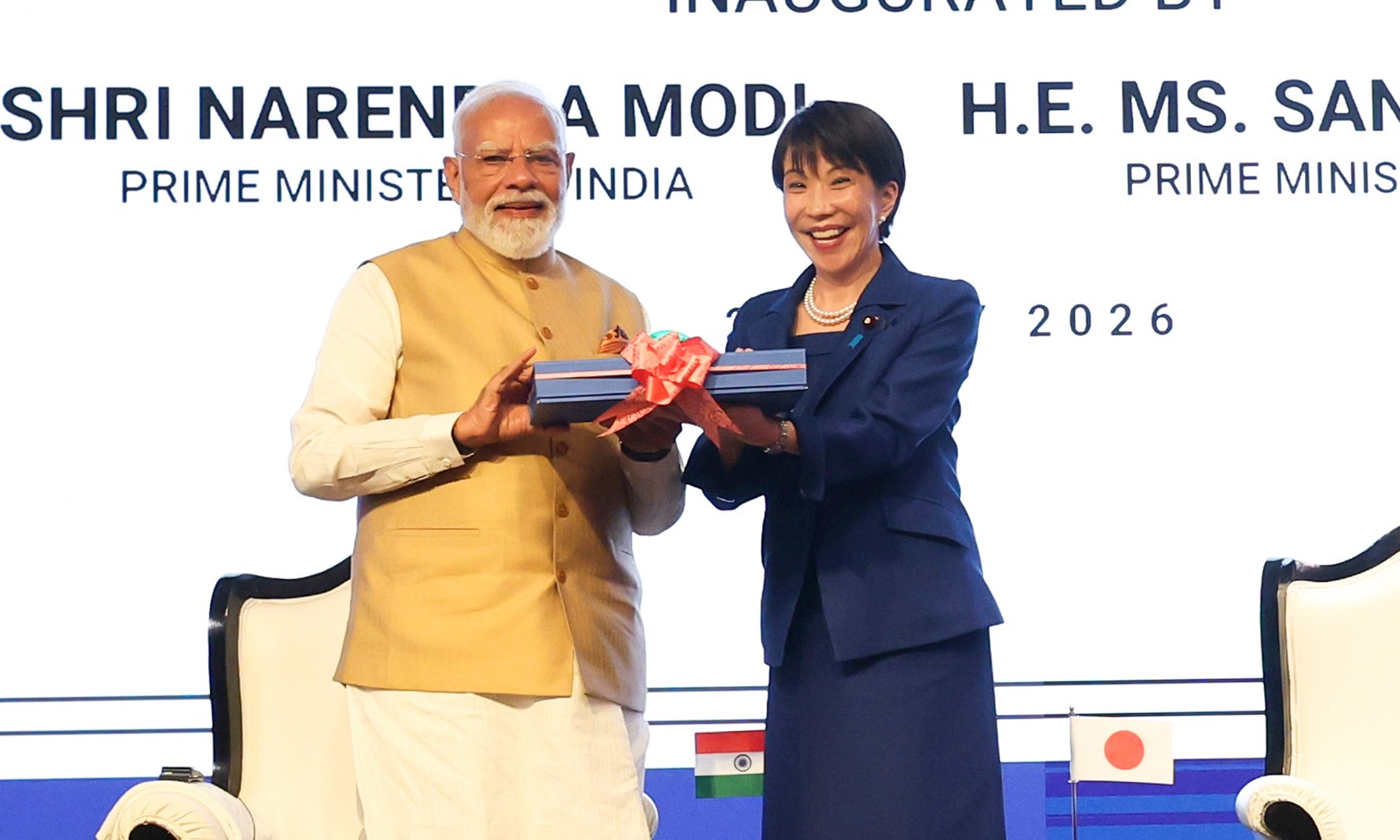
NEW DELHI: Ushering in a new chapter of their Special Strategic and Global Partnership, India and Japan on Thursday unveiled an ambitious package of 16 key outcomes following the 16th India-Japan Annual Summit. The sweeping agreements focus heavily on future-oriented sectors such as artificial intelligence, economic security, critical minerals, and robust supply chains.
The landmark agreements were announced following high-level bilateral talks between Prime Minister Narendra Modi and Japanese Prime Minister Sanae Takaichi in New Delhi. The summit aimed to aggressively boost resilient supply chains, innovation, and joint research collaboration while addressing mutual geopolitical and economic challenges.
Economic Security and AI at the Forefront
A major highlight of the summit was the India-Japan Joint Declaration on Economic Security. This pact aims to propel project-based collaboration across critical sectors, including semiconductors, critical minerals, clean energy, and pharmaceuticals.
Equally significant was the Joint Statement on Cooperation in Artificial Intelligence, elevating the bilateral relationship to a strategic AI research and development partnership. This includes a comprehensive roadmap covering the entire AI technology stack, with the shared goal of promoting safe, trusted, and human-centric AI. To operationalize this, the IndiaAI Mission and Japan’s Ministry of Economy, Trade and Industry (METI) signed a Memorandum of Cooperation to share computing resources, foster joint projects, and align AI policies.
The technological momentum extended into the private sector and academia, with memorandums signed between:
-
IIT Bombay, BharatGen, and Japan’s National Institute of Informatics to jointly develop large language models (LLMs) focused on scientific reasoning.
-
SarvamAI and Preferred Networks to collaborate on foundation models.
-
NIXI and Japan’s JPNIC to boost cybersecurity, IPv6 adoption, and internet registry operations.


Clean Energy, Mobility, and Trade
Strengthening energy ties amidst a volatile global landscape, the two nations issued a Joint Statement on Energy Resilience. The agreement focuses on strengthening strategic crude oil reserves and promoting joint investments in maritime energy transport. Another massive environmental initiative is the Cooperative Biogas for Growth (CBG) pact, which supports establishing 1,000 biogas and organic fertilizer plants across India via dairy cooperatives.
The leaders also formalized the Next Generation Mobility Partnership (NGMP), an initiative designed to accelerate private-sector cooperation in railways, automobiles, aviation, and urban development, officially positioning India as a “Make in India for the World” export hub.
Scientific Research and Financial Integration
Expanding deep-tech collaboration, India’s Centre for Cellular and Molecular Platforms (C-CAMP) and the National Centre for Biological Sciences (NCBS) signed crucial pacts with Japan’s RIKEN institute to advance life sciences, healthcare, and neuroscience research.
To streamline economic interactions, a pact between India’s IFSCA and Japan’s Financial Services Agency was exchanged to regulate and supervise emerging FinTech and RegTech markets. Supply chains will also be fortified through dedicated MoUs focusing on battery manufacturing, pharmaceuticals, and upstream critical mineral exploration.
Celebrating their enduring relationship, the two leaders announced that 2027 will be observed as the India-Japan Year of Shared Horizons, commemorating the 75th anniversary of their diplomatic ties with a series of cultural and strategic events.