

WASHINGTON / JERUSALEM / TEHRAN — The Middle East has been thrust into a massive new conflict after the United States and Israel launched coordinated military strikes against Iran on Saturday. The Pentagon-led offensive, officially dubbed “OPERATION EPIC FURY,” specifically targeted Iran’s top leadership and military infrastructure, completely shattering any remaining hopes for a diplomatic resolution to Tehran’s nuclear dispute.
Decapitation Strike Attempted According to Israeli and US sources, the first wave of strikes aimed directly at Iranian Supreme Leader Ayatollah Ali Khamenei and President Masoud Pezeshkian. While the immediate outcome of these strikes remains unconfirmed, intelligence sources indicated that Khamenei had been transferred to a secure location prior to the bombardment.
However, an Iranian source close to the establishment reported that several senior commanders within Iran’s Revolutionary Guards (IRGC) and key political officials have been killed.

Gulf Arab States Under Fire in Swift Retaliation True to prior warnings, Tehran immediately retaliated by launching a barrage of ballistic missiles at Israel and neighboring Gulf Arab states hosting US military bases.
-
Bahrain: A service center of the US Fifth Fleet was struck. Witnesses reported wailing sirens and a thick grey plume of smoke rising near the coastline.
UAE & Qatar: Loud booms echoed across Abu Dhabi and Dubai. Both Qatar and the UAE, alongside Kuwait, reported intercepting incoming Iranian missiles.
-
Iraq: The Iran-aligned armed group Kataib Hezbollah announced imminent attacks on US bases in the region.
“All U.S. bases and interests in the region are within our reach. This operation will continue relentlessly until the enemy is decisively defeated,” declared Iran’s Revolutionary Guards in a televised statement.
Calls for Regime Change US President Donald Trump and Israeli Prime Minister Benjamin Netanyahu both framed the military campaign as an opportunity for the Iranian populace to overthrow their government.
In a social media video, President Trump cited the 1979 US embassy hostage crisis and urged Iranians to take cover. “When we are finished, take over your government. It will be yours to take. This will be probably your only chance for generations,” Trump stated, adding that the “massive” operation was necessary to eliminate imminent threats and prevent Tehran from acquiring a nuclear weapon.
Prime Minister Netanyahu echoed this sentiment, stating the joint attack “will create the conditions for the brave Iranian people to take their destiny into their own hands.” Israeli Defence Minister Israel Katz characterized the offensive as a necessary pre-emptive strike.
Civilian Toll and Ground Panic The human cost of the sudden escalation is already mounting. Iranian state media reported that 40 people were killed in an Israeli airstrike on a girls’ primary school in southern Iran, a claim Reuters could not independently verify and the Israeli military has not yet addressed.
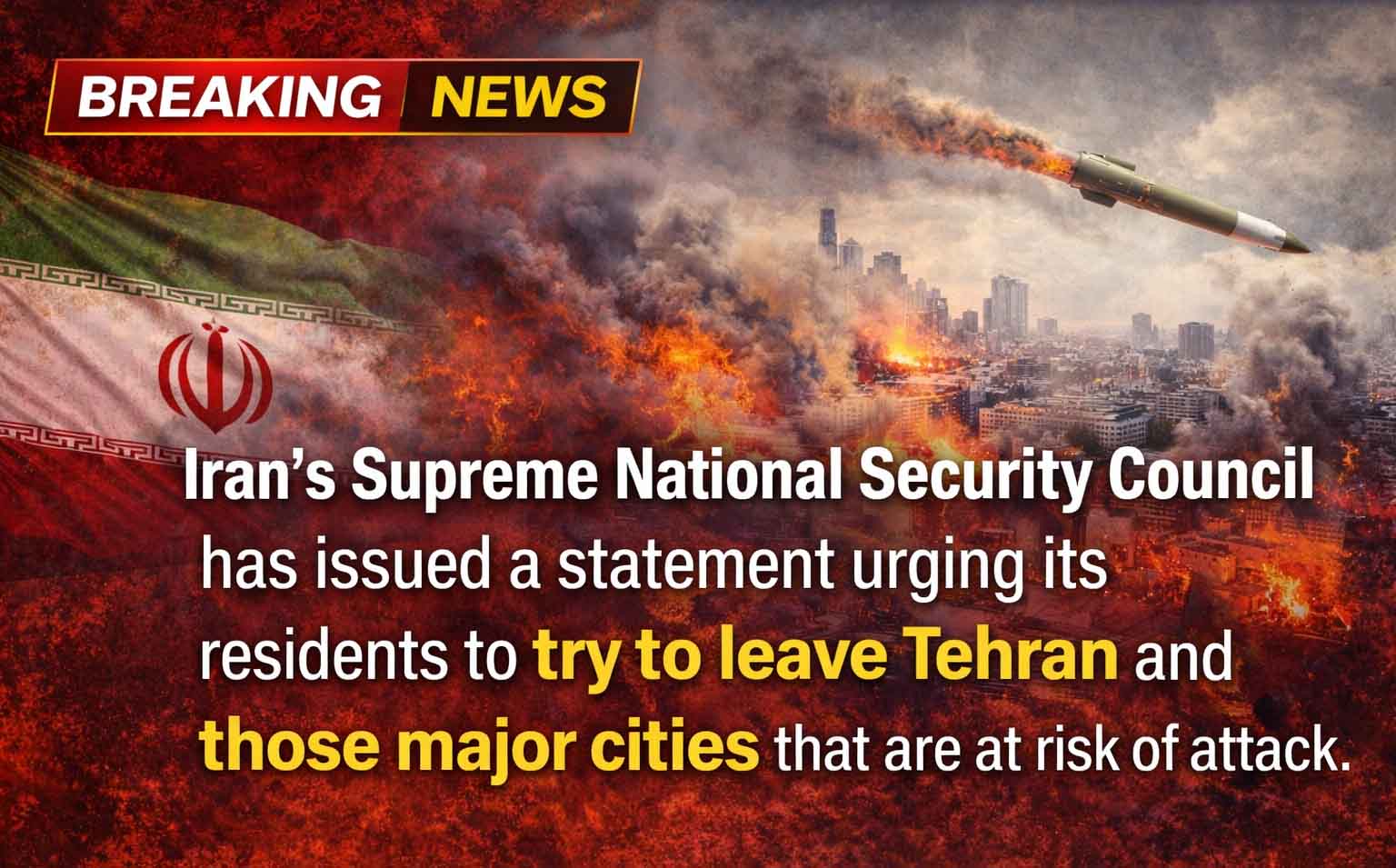
In Tehran, absolute panic has taken hold. Residents formed massive queues at gas stations and rushed to banks to withdraw cash, fearing an imminent nationwide internet blackout. “We are being killed by the regime and by Israel. We are the victims of this regime’s hostile policies,” said Maryam, a 54-year-old housewife fleeing to northern Iran.
Simultaneously, Israel has gone into full lockdown, closing its airspace to civilian flights, shutting down schools, and banning public gatherings.
Global Economic Fallout Looms With explosions reported near Iran’s Kharg Island—the export hub for 90% of the country’s crude oil—and flights cancelled across the entire Middle East, global markets are bracing for severe shockwaves.
Jorge Leon, head of geopolitical analysis at Rystad Energy, warned of immediate economic consequences: “If we don’t see signs of de-escalation over the weekend, risk premiums could still drive Brent crude up by $10–$20 a barrel on Monday.”