


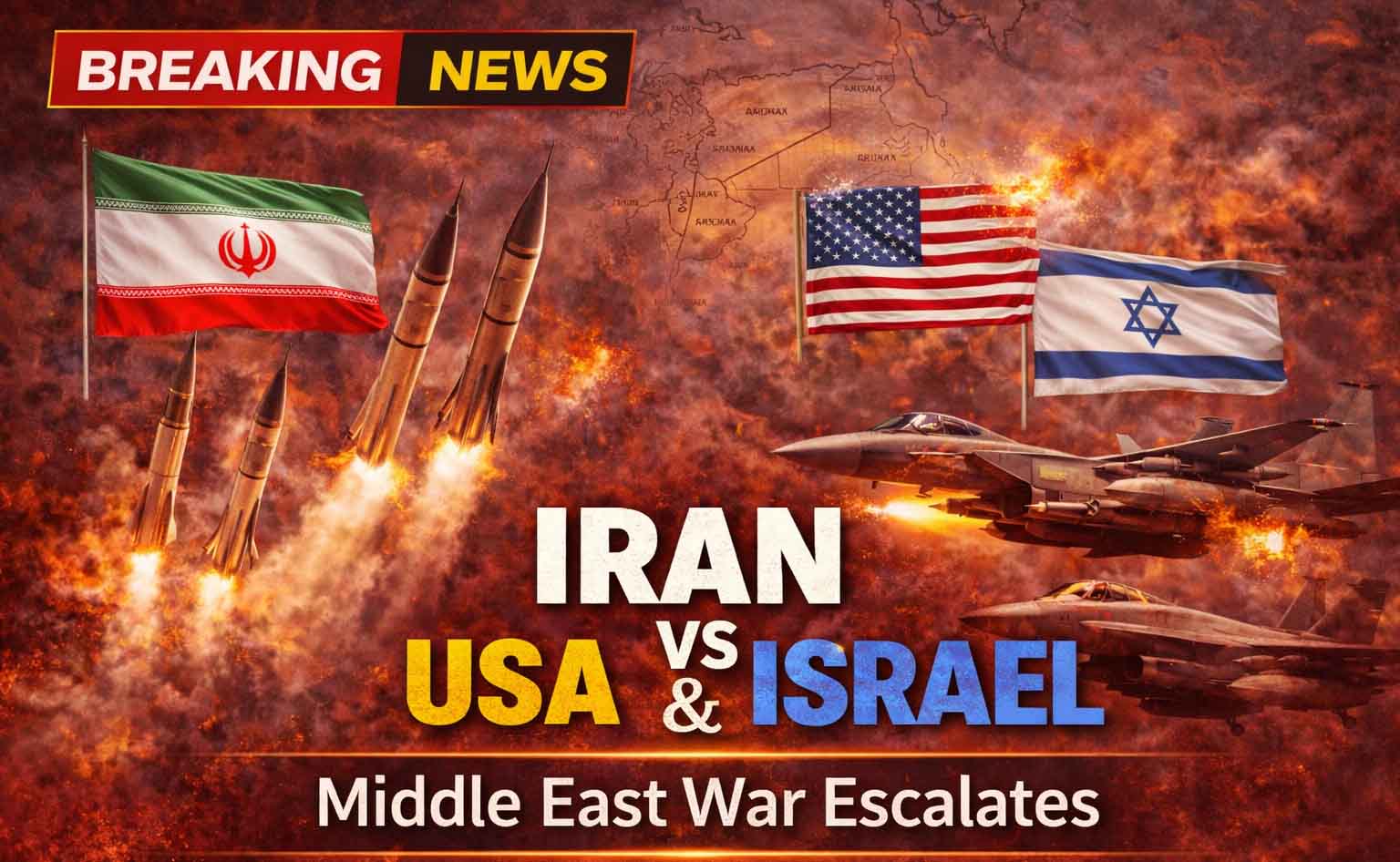
TEHRAN / WASHINGTON — The U.S.-Israeli military campaign against Iran entered its sixth consecutive day on Thursday with what terrified residents described as the most intensive bombing yet. The escalating offensive has forced the abrupt, indefinite postponement of a planned three-day mourning period for slain Supreme Leader Ayatollah Ali Khamenei.
“Today is worse than yesterday. They are striking northern Tehran. We have nowhere to go. It is like a war zone. Help us,” said Mohammadreza, a 36-year-old resident, his voice shaking over the phone as explosions echoed in the background from the latest wave of strikes on government targets.
Succession in the Crosshairs The sudden cancellation of Khamenei’s memorial—which was slated to begin Wednesday evening in a Tehran prayer hall—interrupted apparent plans by the Iranian establishment to swiftly anoint his hardliner son, Mojtaba, as his successor.
While officials cited no formal reason for the delay, sources indicate it was driven by the severe risk of assassination for high-ranking attendees while U.S. and Israeli warplanes continue to dominate the skies. Announcing Mojtaba during a massive public mourning period would have allowed him to consolidate power amidst a passionate display of street-level support. Israel has already explicitly stated that any replacement for Khamenei who continues hostile policies will immediately become a target for elimination.

Meanwhile, signs of severe internal fracturing have emerged. Iranian State Television was hacked on Thursday, broadcasting a video of Reza Pahlavi, the exiled son of Iran’s last Shah and a prominent opposition figure.
“A heavy burden of destiny rests upon the shoulders of us all. And we, together, will walk this path until final victory. Long live Iran,” Pahlavi declared to the nation.
War on the High Seas and Global Economic Fallout As the conflict spirals, the theater of war has expanded drastically. Iran has vowed brutal revenge following a U.S. torpedo attack that sank an Iranian warship off the coast of Sri Lanka—thousands of miles from the primary battle zone—killing more than 80 sailors. Iran’s foreign minister warned that Washington would “bitterly regret” the precedent of striking without warning in international waters.
In rapid retaliation, Iran’s Revolutionary Guards claimed to have struck a U.S. tanker in the northern part of the Gulf, leaving the vessel ablaze. The Guards have overtly stated that passage through the critical Strait of Hormuz is now strictly under the control of the Islamic Republic.
The economic fallout is intensifying globally, as countries find themselves suddenly cut off from a maritime corridor that handles a fifth of the world’s oil and liquefied natural gas supplies.
The regional spillover continues as well. Azerbaijan warned it is preparing a response after two Iranian drones crossed its border, wounding four people in the Nakhchivan exclave—a claim Tehran strongly denies.
Blank Check from Capitol Hill In Washington, the Trump administration has effectively secured a blank check for the ongoing military campaign. Late Wednesday night, Republican senators successfully blocked a motion aimed at stopping the U.S. air campaign and requiring explicit congressional authorization for the war. This rejection leaves President Donald Trump’s executive power to direct the rapidly widening Middle East conflict largely unbound.
Underscoring the administration’s resolve, Israel reported that U.S. Defense Secretary Pete Hegseth told his Israeli counterpart, Israel Katz, via telephone: “Keep going until the end – we’re with you.”
While air raid sirens continue to send Israelis into emergency shelters, IDF spokesman Effie Defrin noted a slight decrease in daily missile launches from Iran. “The more we intensify the damage and eliminate the launchers, the more the threat will diminish over time,” Defrin stated.