

NEW DELHI: NITI Aayog on Thursday released a landmark report titled “Strategic Roadmap for Making Ayurveda Global.” The comprehensive document lays out a long-term strategy aimed at transforming Ayurveda from a traditional Indian practice into a globally recognized, evidence-based healthcare system by 2047.
Prepared by NITI Aayog’s Health Division in collaboration with PricewaterhouseCoopers (PwC), the report provides a detailed assessment of Ayurveda’s current global footprint. It identifies key opportunities and outlines critical policy measures needed to overcome the challenges in expanding the international presence of Indian traditional medicine.
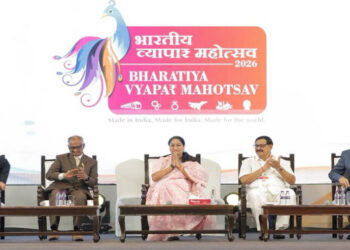
The report was officially launched by Dr. Ashok Kumar Lahiri, Vice Chairman of NITI Aayog, in the presence of Prof. (Dr.) M. Srinivas, Member of NITI Aayog, and Vaidya Rajesh Kotecha, Secretary of the Ministry of Ayush. The high-profile event also saw participation from senior officials representing the Ministry of External Affairs, government agencies, research institutions, and industry associations.
Economic Value and Cultural Soft Power
Speaking at the launch event, Dr. Lahiri emphasized that the globalization of Ayurveda presents India with a unique, multi-faceted opportunity.

“The globalization of Ayurveda presents India with a unique opportunity to emerge as a global leader in traditional medicine while generating economic value, creating jobs, boosting exports, and strengthening the country’s cultural soft power,” Dr. Lahiri stated.
He heavily stressed that achieving this ambitious vision would require a highly coordinated, “whole-of-government” approach and strict, time-bound implementation.
Prof. M. Srinivas added that the initiative is not just about commercial gains. He emphasized that the broader objective goes far beyond expanding markets or boosting exports. The core mission is to actively improve global health outcomes by offering people across the world additional evidence-based healthcare options, deeply rooted in the philosophical vision of “Sarve Bhavantu Sukhinah” (May all be happy).
A Three-Pillar Framework
Based on extensive stakeholder consultations, international benchmarking, and evidence-based analysis, the roadmap proposes a robust three-pillar framework centered around:
-
Availability: Expanding the global Ayurveda workforce, boosting international manufacturing and exports, and strengthening cross-border education networks.
-
Acceptability: Improving global regulatory compliance, strengthening evidence-based clinical research, increasing health insurance coverage, and fostering strategic international collaborations.
-
Propagation: Enhancing global brand visibility, aggressively promoting medical value travel, and expanding diplomatic engagements.
Ministry of Ayush Secretary Rajesh Kotecha highlighted the ministry’s relentless efforts over the past decade to promote Ayurveda globally. He noted that the new roadmap’s targeted recommendations will directly complement these ongoing initiatives, providing fresh momentum to establish Ayurveda as an internationally accepted standard of care. Further echoing this sentiment, Additional Secretary (UNES) Acquino Vimal underlined India’s steady diplomatic progress in forging international healthcare partnerships.
Aligned with the grand vision of Viksit Bharat@2047, the roadmap is designed to act as a vital guide for policymakers, practitioners, and international partners. NITI Aayog noted that the report strongly reinforces India’s unwavering commitment to the “One Earth, One Health” philosophy while firmly cementing the nation’s position as a global leader in holistic and sustainable medicine.